
How to Reverse Summer Skin Damage Before Fall (A Clinician's Repair Protocol)
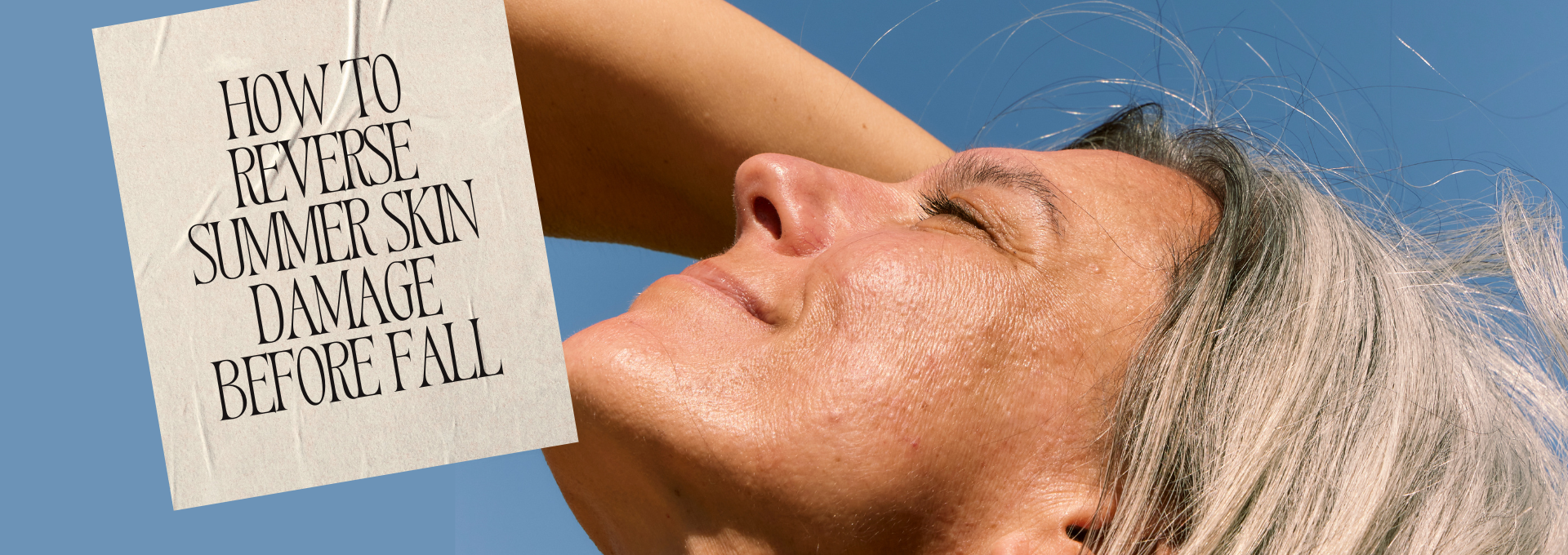
Months of UV, heat, and sweat take a measurable toll on your skin. Here's what actually happened at the cellular level and the repair protocol that restores it before fall.
You made it through summer. The vacations, the pool days, the long weekends outside. Your skin absorbed all of it.
And now, in the mirror, the evidence is starting to show. The tone is uneven. The texture feels rougher. There's a dullness that wasn't there in May. Maybe new spots appeared. Maybe existing ones got darker. Maybe your skin just looks tired in a way that moisturizer can't fix.
This isn't your imagination. And it's not something a single facial will reverse.
Three to four months of sustained UV exposure, heat, chlorine, salt water, and sweat create measurable changes in your skin at the cellular level. Understanding what actually happened is the first step toward repairing it effectively, and timing that repair before fall is more strategic than most people realize.
What Summer Actually Did to Your Skin
The damage isn't just on the surface. It's layered, and each layer requires a different approach.
Collagen degradation. UV radiation doesn't just burn your skin. It penetrates into the deeper layers and breaks down collagen fibers. Collagen is what gives your skin its firmness and structure. After months of cumulative UV exposure, the collagen matrix is weaker, less organized, and producing at a slower rate. This is why skin feels looser and less resilient by the end of summer, even if you wore sunscreen consistently.
Melanin overproduction. Your body produces melanin as a defense mechanism against UV damage. But after months of sustained sun exposure, that production overshoots. The result is uneven pigmentation: sun spots, darkened patches, and a mottled, inconsistent tone that makes skin look older than it is. For anyone prone to melasma, summer can trigger flares that linger well into fall.
Barrier depletion. Your skin's outermost layer is a protective barrier made of lipids, ceramides, and natural moisture factors. Heat, sweat, chlorine, salt water, and increased cleansing all strip that barrier progressively over the summer months. A compromised barrier means increased sensitivity, dehydration, and reduced ability to hold onto moisture regardless of how much you're applying on top.
Dehydration. Not just from the outside. Heat and increased activity pull water from your skin at a cellular level. Chronic low-grade dehydration over the summer months leaves skin looking flat, dull, and less plump. Fine lines that weren't visible in spring become more pronounced because the tissue underneath has lost volume.
The Post-Summer Repair Window
Late August through September is the ideal window for skin repair. UV intensity is declining but hasn't disappeared. Your skin is no longer under peak assault but still carries the accumulated damage. This is when intervention has the most leverage.
Waiting until October or November means the damage has had more time to settle in. Pigmentation becomes harder to treat. Collagen loss continues unchecked. And the dry air of fall compounds the barrier damage summer already created.
Starting now gives your skin the best possible runway to recover before winter, when cold air, indoor heating, and reduced humidity create a second wave of stress.
Phase 1: Rebuild the Barrier (Weeks 1-2)
Before any resurfacing treatment, the barrier needs to be functional. Treating damaged skin on top of a compromised barrier creates more irritation, longer recovery, and diminished results.
This phase focuses on restoring the protective layer:
→ Switch to a gentle, non-stripping cleanser if you haven't already
→ Layer ceramide-rich moisturizers to rebuild lipid content
→ Use hyaluronic acid to draw and hold moisture into depleted tissue
→ Continue daily SPF, even as UV intensity drops
→ Pause any aggressive actives like retinol, vitamin C at high concentrations, or exfoliating acids until the barrier stabilizes
Two weeks of intentional barrier repair prepares your skin to respond to treatment rather than react to it.
Phase 2: Resurface and Stimulate (Weeks 3-8)
Once the barrier is stable, this is the window for professional treatments that address the deeper damage.
Thulium laser is particularly effective in this phase. The wavelength targets the superficial layer where pigmentation and texture irregularities live, clearing sun damage and stimulating cell turnover without the extended downtime of deeper lasers. For melasma or widespread sun spots, this is often the most targeted option.
Chemical peels at medium depth can address both pigmentation and texture in a single session. They remove the damaged outer layer and trigger a renewal process underneath. The key is matching the peel depth to the level of damage and to your skin's current tolerance.
Microneedling stimulates collagen production in the mid-dermis. After months of UV-driven collagen breakdown, this is how you signal your body to start rebuilding. For enhanced results, combining microneedling with PRP or growth factors delivers repair signals directly into the treatment zone.
The specific combination depends on your skin type, the severity of damage, and what concerns are most pressing. Some patients need all three in sequence. Others need one or two. This is where a clinical assessment determines the right plan.
Phase 3: Reintroduce Actives (Weeks 4-8, Overlapping)
As your skin recovers from professional treatments, active ingredients can be layered back in gradually:
→ Vitamin C returns first. It provides antioxidant protection and supports the brightening process already underway from treatments. Start with a lower concentration and build.
→ Retinol reintroduces next. It accelerates cell turnover, supports collagen synthesis, and refines texture. Begin with two to three nights per week and increase as tolerated.
→ Niacinamide supports barrier function while addressing residual pigmentation and redness. It layers well with other actives and is generally well tolerated even on sensitized skin.
→ Exfoliating acids return last and at reduced frequency. Once or twice weekly to maintain the smoothness achieved through professional treatments without over-stressing the new skin.
The order matters. Introducing everything simultaneously overwhelms skin that's still in active repair. Sequencing allows each ingredient to do its job without competing or causing setback.
Why Timing This Before Fall Matters
Fall is when your skin has the best opportunity to rebuild without fighting new damage. UV intensity drops. You spend less time in direct sun. The environment shifts from assault to recovery.
If you start the repair process now, by the time winter arrives your skin has rebuilt its collagen, corrected its pigmentation, restored its barrier, and reestablished its active skincare protocol. You enter the colder months from a position of strength rather than playing catch-up.
If you wait, the damage compounds. Pigmentation sets deeper. Collagen loss accelerates. And the dry, harsh conditions of winter hit skin that's already depleted.
The post-summer repair window is a strategic advantage. Use it.
If your skin took a beating this summer and you want to repair the damage before fall compounds it, schedule your post-summer skin assessment. We'll evaluate what your skin needs, map the right treatments in the right order, and build a plan that has you going into winter with your strongest skin.
